




Verdicts & Settlements: $275,000 Settlement Reached in Department Store Slip & Fall
July 27, 2022
Verdicts & Settlements: Jury Awards Homeowner New Roof Against Citizens Property Insurance Corporation
August 12, 2022

Injuries, regardless of who is responsible for them, often have a monetary cost. For instance, you might require emergency medical care, which can be expensive. If your injuries are severe, you may have to undergo life-saving surgery or stay in the hospital for days. Then, you may require weeks of rehabilitation.
Every day you’re recovering or participating in rehab is a day you’re not working. That means not only do you have a lot of medical bills, but you’re also losing out on the wages you would be earning had you not had the injury.
All those monetary costs are quantifiable. You can add up your medical bills and calculate your lost wages based on your salary or past pay stubs. These types of damages are known as economic damages or special damages.
However, these tangible expenses are far from the only costs you might bear as a result of your injuries. You could also experience an unquantifiable level of pain and suffering.
But what is pain and suffering, and how can you prove it? Learn more below, as well as the benefits of working with a personal injury attorney like Kanner & Pintaluga.
What Is Pain and Suffering?
Pain and suffering is a personal injury term that covers the broad range of emotional and psychological consequences that people suffer due to injuries inflicted upon them by negligent parties.

These injury side effects can be obvious, like the actual physical discomfort you feel due to a broken leg or the concussion you suffered in a car crash. However, they can also be peripheral, like the loss of enjoyment you may experience after an injury that prevents you from playing sports, or the limitations on daily activities that can result from a brain injury.
The emotional and psychological toll of traumatic injuries can vary greatly and are highly dependent on your unique experience. Some people may experience PTSD after a car accident or assault, while others might not. A person injured in a fire may have disfiguring burn scars that make them embarrassed to go out in public or wear a bathing suit, while a person involved in a slip and fall might suffer no lasting damage to their appearance.
Assigning a dollar amount to an individual’s experiences isn’t easy since there’s no defined rubric or agreed-upon cost chart for pain and suffering. It’s often up to insurance companies, personal injury attorneys, and juries to negotiate and decide what an appropriate recovery amount should be, depending on the circumstances.
Many types of psychological issues or emotional traumas may justify seeking pain and suffering damages. These can include things like:
- Anxiety
- Grief
- Embarrassment
- Humiliation
- Depression
- Loss of companionship
Sexual dysfunction - Fear
- Indignity
- Reduction in quality of life
- Disfigurement
- Mental or physical impairment/disability
- Even inconvenience or undue ordeal
Some of those consequences are more severe than others. For example, being inconvenienced by someone else’s negligent actions is less serious than suffering a permanent physical or mental impairment. The total amount of compensation you are entitled to will depend on your individual circumstances.
How To Prove Pain and Suffering in an Injury Claim
To claim compensation and increase your chances of a successful outcome, you must prove pain and suffering, which may be difficult. For instance, demonstrating physical injuries is often a lot easier than proving emotional or psychological distress. That said, there are various ways you can support your claim, such as:
- Keeping all medical records that outline your diagnosis, treatment, and recovery
- Getting notes from your healthcare provider about your injuries and progress
- Compiling a timeline that details all your doctors’ visits and procedures related to your injury
- Keeping a pain or symptom journal that tracks your pain levels, medication side effects, emotional well-being, and more
- Collecting third-party statements from friends, family, and colleagues that describe your injury and its impact on your life
What Affects the Value of Your Claim?
You can sue for pain and suffering, even though it’s less common than seeking traditional damages like lost wages or property damage. The value of pain and suffering damages, which are non-economic damages, depends on factors such as the severity of your injuries and their impact on your day-to-day life.
For instance, being uncomfortable for a few weeks after a car crash is worth far less than suffering a permanent disability after a truck accident. The permanence of an accident’s consequences can significantly alter the eventual pain and suffering damages you may receive.
The severity of an accident’s impact will also be a major variable. For example, someone who is left with visible scarring on their face after a crash might be entitled to more pain and suffering damages than someone who suffered a more serious injury but recovered fully with no visible scarring.
Other factors that can determine the value of pain and suffering damages include how much your injuries affect your work or daily activities and the credibility and consistency of your evidence. If you live in a state with a comparative fault law, you might receive a smaller amount of damages if you are partly responsible for the event that caused your injuries.
How Insurers Evaluate Claims
There are a couple of common methods insurers use to assign an appropriate dollar amount to intangible pain and suffering losses:
- Per diem method
- Multiplier method
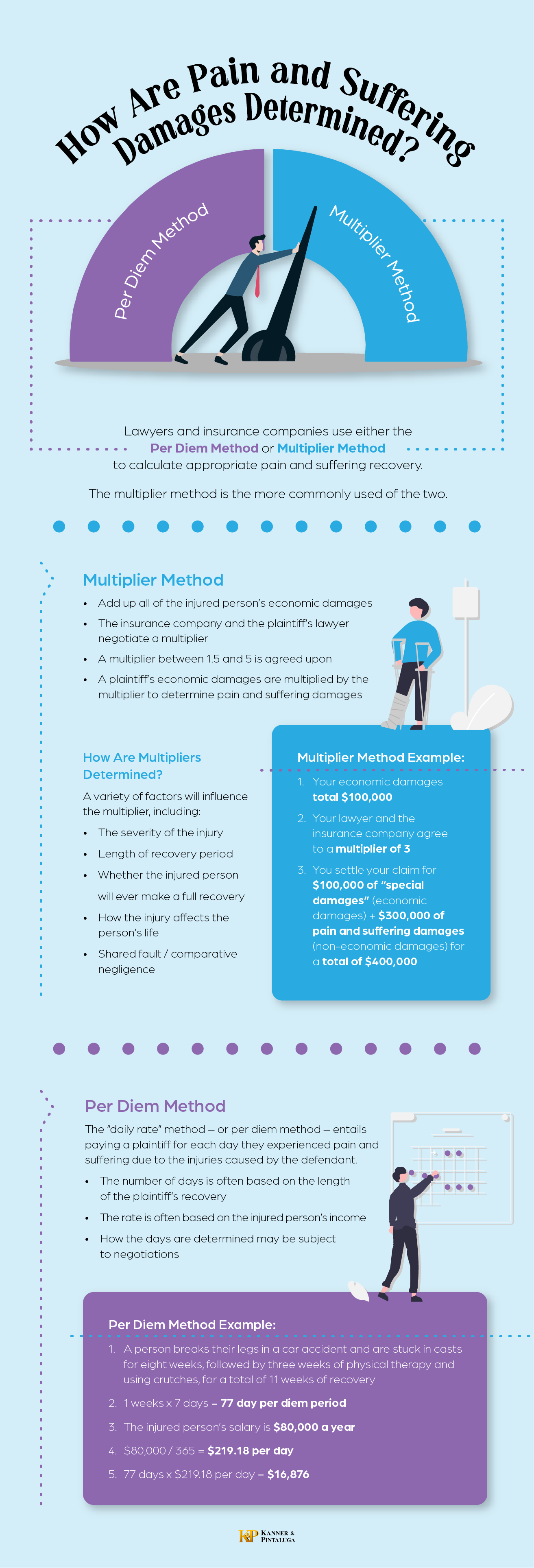
The per diem method, also known as the daily rate method, involves multiplying a dollar amount by the number of days it takes for a person to recover from an illness or injury fully. This method generally isn’t used for someone who suffers permanent injuries or disability due to an accident since it’s impossible to accurately predict how long the victim will live with their injuries.
The multiplier method is the more common of the two. The victim’s legal team and the insurance company will negotiate to determine a fair multiplier, which is usually between 1.5 and five. The injured person’s economic damages (the quantifiable damages based on lost wages and medical costs) are then multiplied by the multiplier to determine their pain and suffering compensation.
The multiplier will be based on factors like the severity of the injury, its long-term impact on the victim’s life, and whether the victim will ever fully recover.
A person who loses a limb or the ability to walk may be entitled to a multiple on the higher end of the scale. In comparison, someone who was only inconvenienced or suffered temporary embarrassment might get a multiplier on the lower end of the spectrum.
For many victims, the multiplier method is the more favorable option, and it’s the calculation that most personal injury attorneys advocate for in negotiations.
Insurer Tactics for Discounting Non-Economic Damages
Insurance companies may use various tactics to delay your claim or minimize the total compensation amount you are entitled to, such as:
- Gaps in care: An insurer may argue that your injuries aren’t serious if there are breaks in your medical treatment.
- Prior conditions: This occurs when an insurer blames your injuries on a pre-existing health condition rather than the accident.
- Low-impact arguments: If your accident is considered ‘low impact’—for example, a car accident that didn’t cause much damage to the body of the car—an insurer might try to argue that your injuries aren’t that serious.
- Surveillance/social posts: An insurer might hire an investigator to record you or look at your social media accounts, hoping to find evidence that your injuries aren’t as serious as you claim.
Building a Strong Case for Compensation
Simply listing damages isn’t enough when filing a pain and suffering claim. With the help of a personal injury attorney, you can build a strong case that includes the following:
- Narrative and evidence: Present a strong narrative of what happened and how it impacted your life with evidence such as photos, medical records, and a pain journal for injury claims.
- Doctor’s opinions: Include statements from medical professionals that outline your injuries, condition, treatment, and recovery.
- Damages summary: Create a list of all the losses you’ve incurred since your injury, such as lost wages and medical bills.
- Specific demand ranges: Clearly state the amount of compensation you are seeking within a reasonable range.
When To Consider Filing a Lawsuit
When people are injured by the careless and reckless actions of others, the injured party should be fairly compensated. Although money won’t ever reverse pain, suffering, or loss, it is the best way to at least partially make things right.
Consider filing a lawsuit when compensation negotiations with your insurance company fail or there are delays in receiving the money you deserve. The personal injury lawyers at Kanner & Pintaluga can fight on your behalf and present your case effectively if you decide to pursue court action.
Our passionate team can strengthen your pain and suffering claim in various ways. For example, we’ll gather evidence through the discovery process and seek out expert testimony that validates your version of events, increasing your chances of a successful outcome in court. We’ll also present your case to a jury in the clearest and most compelling way possible.
While it’s true that no amount of money can reverse pain and suffering, it can ensure your family is cared for and you can live as comfortably as possible. Discover why many individuals with injuries choose Kanner & Pintaluga. Call us at (800) 586-5555 to get started.